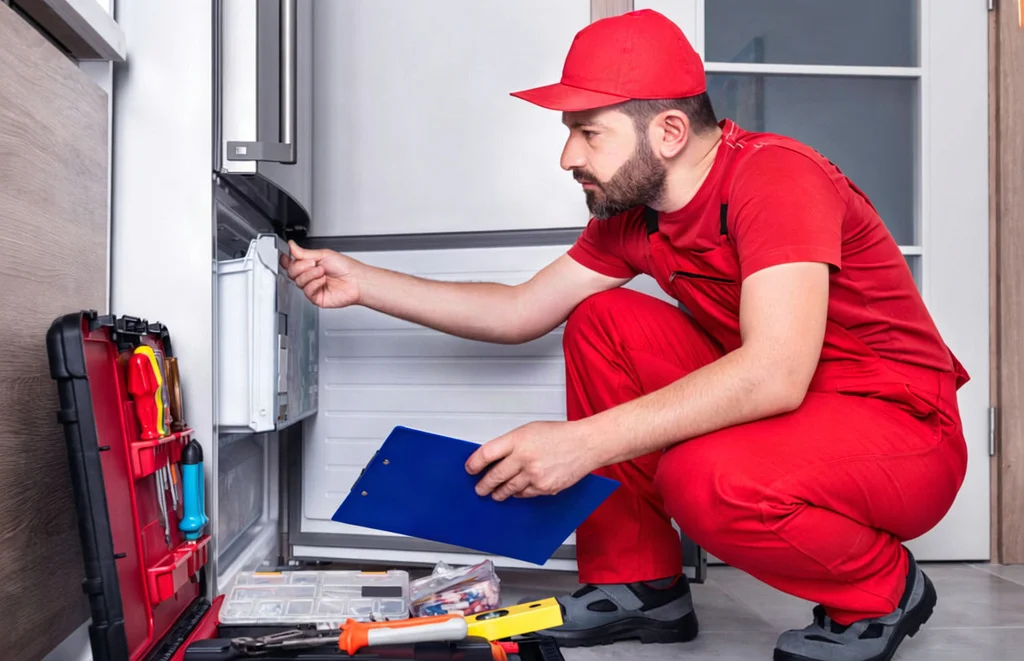
A refrigerator that stops cooling is one of the most disruptive appliance problems a household can face. Food spoils fast, and the clock starts the moment you notice something is off. The good news is that a warm fridge does not always mean a major failure. Several of the most common causes are simple, and a few you can check yourself before you call anyone.
This guide covers the usual reasons a refrigerator stops cooling, what is safe to check on your own, and when the problem calls for a professional. AllStar Appliance Repair has diagnosed and fixed cooling issues across Baltimore and Baltimore County for over 20 years.
Key Takeaways
- A warm fridge is not always a serious repair. Dirty condenser coils, a blocked vent, or a wrong temperature setting are common and easy to rule out.
- Check the basics first: power, temperature settings, door seals, and airflow inside the compartment.
- A fridge that is warm while the freezer stays cold often points to an airflow or defrost problem rather than a dead compressor.
- Clicking, silence, or a fridge that runs constantly usually means it is time for a professional diagnosis.
- Act quickly. The longer a refrigerator stays warm, the more food you risk losing, so same-day service matters.
Start With the Simple Checks
Before assuming the worst, rule out the easy causes. These take a few minutes and can save you a service call.
- Confirm it has power. Check that the unit is plugged in and that the outlet has power. Test the outlet with another device if you are unsure.
- Check the temperature setting. It is easy for a dial or digital control to get bumped. The refrigerator compartment should sit around 37 to 40 degrees Fahrenheit.
- Look at how full it is. A refrigerator that is overpacked can block airflow, while one that is nearly empty holds cold less effectively. Both can cause uneven cooling.
- Inspect the door seals. Warm air leaking past a worn or dirty gasket makes the fridge work harder and cool less. Clean the seals and check that the door closes fully.
- Make sure vents are not blocked. Cold air moves between the freezer and refrigerator through interior vents. Boxes or bags pushed against them can choke off airflow.
If none of these solve the problem, the cause is likely internal, and the sections below explain what a technician looks for.
Common Mechanical Causes of a Warm Refrigerator
Dirty Condenser Coils
The condenser coils release heat as the refrigerator runs. When they are coated in dust and pet hair, the unit cannot shed heat efficiently and cooling suffers. Coils are usually found on the back or underneath the fridge. Cleaning them is routine maintenance, and in many cases it restores cooling on its own.
A Failing Evaporator Fan
The evaporator fan circulates cold air throughout the compartments. If it fails, you may find the freezer still cold while the refrigerator section turns warm, because air is no longer moving between them. A fan that is noisy or silent when it should be running is a common culprit.
Defrost System Problems
Refrigerators run a defrost cycle to keep frost from building up on the evaporator coils. If the defrost heater, thermostat, or timer fails, ice can build up and block airflow, which leaves the fridge warm even while the compressor runs. This is one of the more frequent causes of a fridge that cools poorly.
Faulty Temperature Controls or Thermostat
If the control board or thermostat misreads the temperature, it may not signal the system to cool when it should. This can cause a fridge to stay warm despite appearing to run normally.
Compressor Issues
The compressor is the heart of the cooling system. When it fails or struggles, the refrigerator cannot maintain temperature. Compressor problems are among the more serious and expensive repairs, and on an older unit they are worth a repair-versus-replace conversation.
The Freezer Is Cold but the Fridge Is Warm
This specific pattern is common enough to call out on its own. When the freezer holds temperature but the refrigerator section is warm, the compressor is usually working. The problem is more often airflow related: a failed evaporator fan, a defrost issue causing an ice blockage, or a blocked vent between the two compartments. A technician can pinpoint which one quickly.
When to Call a Professional
Some signs mean it is time to stop troubleshooting and bring in a technician:
- The fridge is silent or making repeated clicking sounds.
- The unit runs constantly but never reaches temperature.
- You have cleaned the coils and checked the settings, and it is still warm after several hours.
- There is visible ice buildup on the interior walls or around the vents.
- Food is beginning to spoil and you cannot afford to wait.
A warm refrigerator is a problem where time matters, so same-day service is worth seeking out. AllStar provides in-home refrigerator repair across Baltimore, and we service all the leading brands. If the issue turns out to be on the freezer or ice maker side, our freezer and ice maker repair service covers that too.
We work on most major brands, from Whirlpool and GE to high-end units like Sub-Zero and Viking. You can see the full list on our appliance brands page.
Frequently Asked Questions
Why is my refrigerator not cooling but the light is still on? Power is reaching the unit, so the issue is usually internal: dirty condenser coils, a failed evaporator fan, a defrost system problem, or a faulty thermostat. Start by cleaning the coils and confirming the temperature setting, then call a technician if it stays warm.
Why is my freezer cold but my fridge is warm? This pattern usually means the compressor is working but cold air is not reaching the refrigerator compartment. The most common causes are a failed evaporator fan, a defrost problem causing an ice blockage, or a blocked interior vent.
Can I fix a refrigerator that is not cooling myself? You can safely check the power, temperature settings, door seals, airflow, and condenser coils. Beyond those, most cooling repairs involve the sealed system or electrical components and should be handled by a professional.
How long can food stay safe in a refrigerator that stopped cooling? Food generally stays safe for up to about four hours if the door stays closed. After that, perishable items are at risk, which is why fast service is important.
How much does refrigerator repair cost in Baltimore? Most refrigerator repairs fall in a general range of $150 to $600, while major sealed-system work such as a compressor replacement runs higher. An in-home diagnosis gives you a firm quote for your specific issue.
Get Your Refrigerator Fixed Today
If your fridge is still warm after the simple checks, do not wait and risk your food. AllStar Appliance Repair offers same-day, in-home refrigerator service across Baltimore and Baltimore County, backed by more than 20 years of local experience.
Contact AllStar Appliance Repair to schedule your repair!