Most households run their washing machine several times a week, so when it starts acting up, you notice fast. It might stop mid-cycle, leave your clothes soaking wet, shake hard enough to walk across the floor, or leave a puddle behind. Each symptom points to a different set of causes, and knowing what you’re looking at helps you decide whether it’s a quick fix or a job for a technician.
This guide covers the most common washing machine problems we see, what usually causes them, what you can safely check yourself, and when to call a professional. AllStar Appliance Repair has repaired washers in homes across Baltimore County and Baltimore City for more than 20 years, on top-load and front-load models from every major brand.
Key Takeaways
- Many washer problems start with simple causes, such as an unbalanced load, a closed water valve, or a clogged pump filter.
- A washer that won’t spin often has a drainage problem. Most machines won’t spin if water can’t drain first.
- Leaks usually come from hoses, the door seal, or the pump. Check hose connections first.
- Loud banging during the spin cycle can mean worn suspension parts or bearings, which get worse the longer they’re ignored.
- Unplug the washer before any inspection, and leave electrical or internal repairs to a professional.
1. Washer Won’t Spin
You open the lid at the end of the cycle and your clothes are still dripping wet. This is one of the most common washer complaints.
Common causes:
- An unbalanced load. A single heavy item, such as a comforter or bath mat, can throw the drum off balance. Most washers will stop or slow the spin to protect themselves.
- A faulty lid switch or door lock. Washers won’t spin unless they detect that the lid or door is securely closed. If the switch or lock fails, the machine thinks the door is open.
- A drainage problem. If the washer can’t pump the water out, it won’t move on to the spin cycle.
- A worn drive belt or motor coupling. On many models, a belt or coupling connects the motor to the drum. When it wears out or breaks, the motor may run but the drum won’t turn.
What you can check: Redistribute the load and run a spin-only cycle. Make sure the lid or door closes firmly. If the washer still won’t spin, check for a drainage problem (below).
2. Washer Won’t Drain
Water left sitting in the drum after the cycle ends is usually caused by a blockage somewhere between the tub and your home’s drain.
Common causes:
- A clogged pump filter or coin trap. Many front-load washers have a small access panel near the bottom front of the machine. Behind it is a filter that catches coins, hair ties, buttons, and lint.
- A kinked or clogged drain hose. Pushing the washer back against the wall can crush the hose.
- A failed drain pump. If you hear the pump humming but no water moves, or you hear nothing at all during the drain cycle, the pump may be jammed or burned out.
- A household drain clog. If the standpipe or laundry sink the washer drains into is backed up, the problem is in the plumbing, not the washer.
What you can check: If your washer has a pump filter, place towels and a shallow pan underneath, then slowly unscrew the filter to drain the water and clear any debris. Check the drain hose behind the machine for kinks. Your owner’s manual will show where the filter is on your model.
3. Washer Is Leaking
A leaking washer needs attention right away. Even a small, steady leak can damage flooring, subfloors, and anything below a second-floor laundry room.
Common causes:
- Loose or worn inlet hoses. The hot and cold water supply hoses can loosen at the connections, or crack as they age.
- A torn door gasket. On front-load washers, the rubber seal around the door can tear or collect debris that breaks the seal.
- A leaking pump or drain hose. Leaks that show up mostly during the drain or spin cycle often come from here.
- Too much detergent. Using regular detergent in a high-efficiency (HE) washer, or using too much HE detergent, creates excess suds that can push water out.
- A worn tub seal. A failing seal under the drum can let water escape, and it often goes along with bearing wear.
What you can check: Tighten the hose connections at the back of the washer and at the wall, and look for cracks or bulges. Inspect the door gasket for tears or trapped items. If your supply hoses are rubber and several years old, consider replacing them with braided stainless steel hoses.
4. Washer Is Loud or Shaking During the Spin Cycle
Some noise during the spin cycle is normal. Loud banging, grinding, or a washer that shakes violently is not.
Common causes:
- An unbalanced load or an unlevel washer. If the machine rocks when you press on its corners, the leveling feet need adjusting.
- Shipping bolts left in place. New front-load washers ship with bolts that hold the drum steady during transport. If they weren’t removed during installation, the washer will shake hard.
- Worn suspension parts. Springs, shock absorbers, or suspension rods let the drum move smoothly. When they wear out, the tub bangs against the cabinet.
- Worn drum bearings. A loud grinding or roaring sound that gets louder as the spin speeds up is a classic sign of bad bearings.
- Something stuck in the drum or pump. Coins, keys, and underwire from bras can rattle loudly or get caught in the pump.
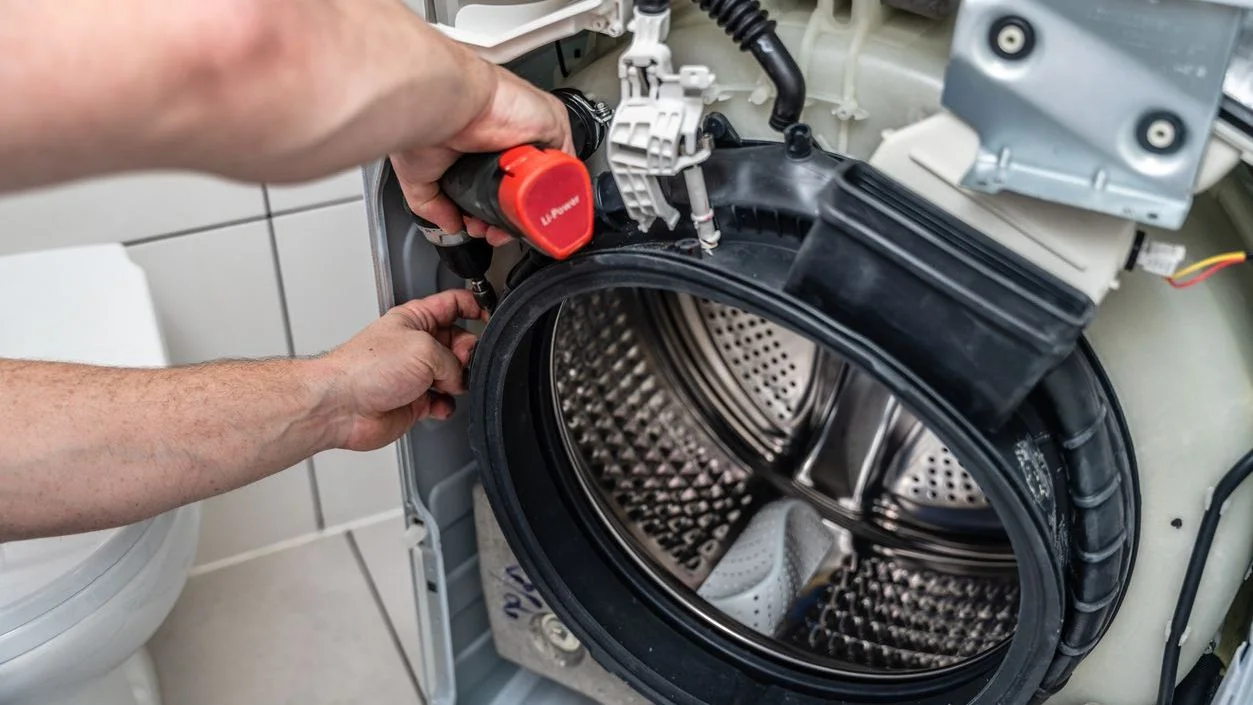
What you can check: Rebalance the load, level the washer, and check the drum and pump filter for loose items. Bearing and suspension repairs require taking the machine apart and should be handled by a technician.
5. Washer Won’t Fill With Water
If the washer hums but no water comes in, or it fills very slowly, the problem is on the supply side.
- Closed or partly closed water valves. Check that both the hot and cold valves behind the washer are fully open.
- Clogged inlet screens. Small mesh screens where the hoses connect to the washer can clog with sediment, which is common in homes with older plumbing.
- A failed water inlet valve. This electrically controlled valve opens to let water in. When it fails, the washer can’t fill.
- A faulty lid switch or pressure switch. These tell the washer when to start and stop filling.
6. Washer Won’t Start
Before assuming the worst, check the basics: Is the washer plugged in? Has the circuit breaker tripped? Is a child lock or delay start turned on? Is the door fully latched? If the washer is getting power but still won’t start, the cause may be a failed door lock, lid switch, control board, or motor, all of which need professional diagnosis.
7. Washer Smells Musty
Front-load washers are especially prone to odors because the door gasket and dispenser trap moisture and detergent residue. Wipe down the gasket after use, leave the door open between loads so the drum can dry, and run a monthly cleaning cycle with a washer cleaner. If the smell persists, a clogged pump filter or drain problem may be leaving stagnant water behind.
When to Call a Professional
Call a technician if:
- You’ve checked the simple causes and the problem continues.
- You hear grinding, roaring, or banging that doesn’t stop after rebalancing the load.
- The washer is leaking and you can’t find a loose hose.
- You notice a burning smell, see scorch marks, or the breaker keeps tripping. Unplug the washer and stop using it.
- The washer displays an error code that returns after a reset.
AllStar provides in-home washer and dryer repair across Baltimore County, including Towson, Timonium, Catonsville, and Owings Mills, plus Baltimore City and nearby counties. We also work with landlords and property managers on in-unit and shared laundry equipment.
If your washer is older and the repair is major, our guide on whether to repair or replace an appliance can help. If you do decide to replace it, ENERGY STAR’s clothes washer guide explains how to find a more efficient model.
Frequently Asked Questions
What is the most common problem with washing machines? Drainage and spin problems are among the most common. They’re often connected, because most washers won’t spin until the water drains. A clogged pump filter, kinked drain hose, or failed drain pump is usually to blame.
Why does my washer shake so much during the spin cycle? An unbalanced load or an unlevel washer is the most common reason. On a new front-load washer, shipping bolts that were never removed can cause violent shaking. If those check out, the suspension parts or bearings may be worn.
Is it worth repairing a washing machine? Often, yes. Many common repairs, such as a pump, lid switch, or inlet valve, cost far less than a new washer. As a rule of thumb, if the repair costs less than half the price of a comparable new machine and the washer is in otherwise good shape, repairing it usually makes sense.
How long should a washing machine last? With regular maintenance, many washers last 10 years or more. Cleaning the pump filter and gasket, not overloading the drum, and using the right detergent all help extend its life.
How much does washer repair cost in Baltimore? It depends on the part and the brand. Our appliance repair cost guide breaks down typical ranges. We provide upfront pricing after diagnosis, and our service charge is waived when you go ahead with the repair.
Get Your Washer Running Again
When the laundry is piling up, you don’t want to wait. AllStar Appliance Repair offers same-day and next-day in-home washer repair across Baltimore County and Baltimore City, with a 90-day parts and labor warranty on our work.